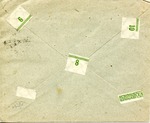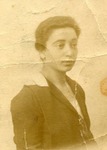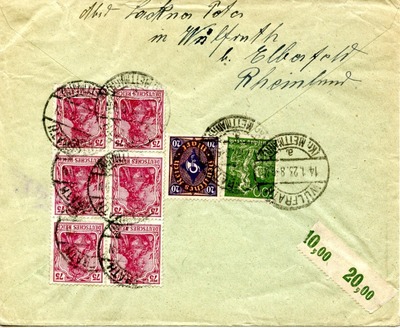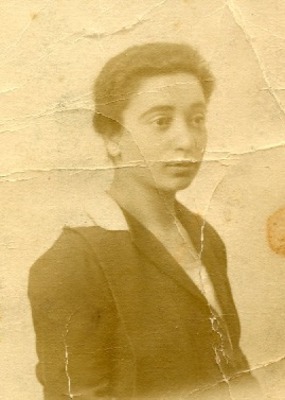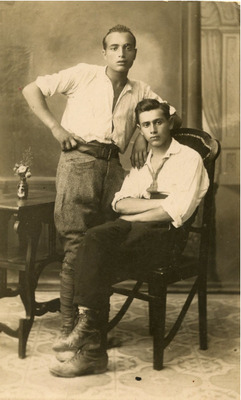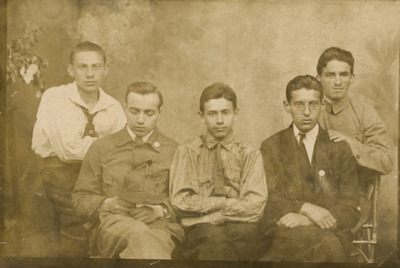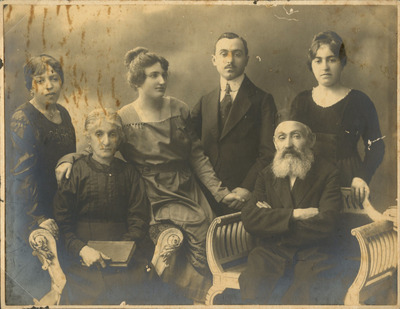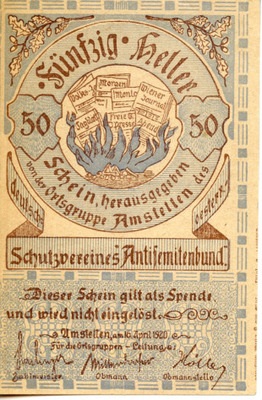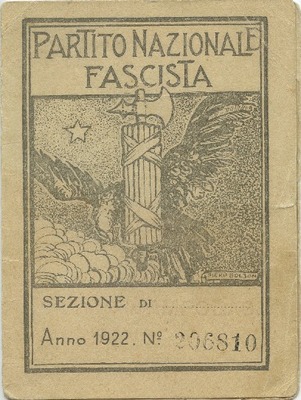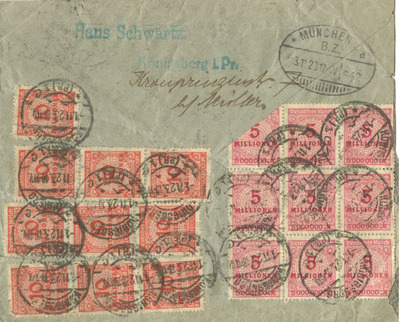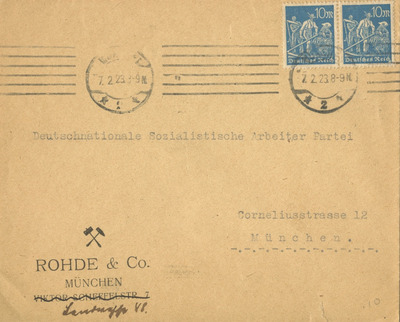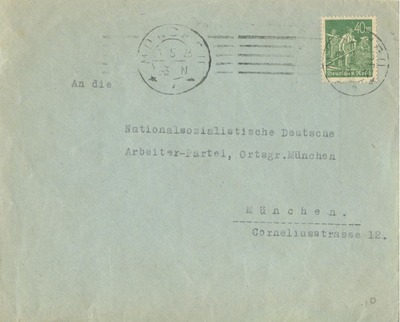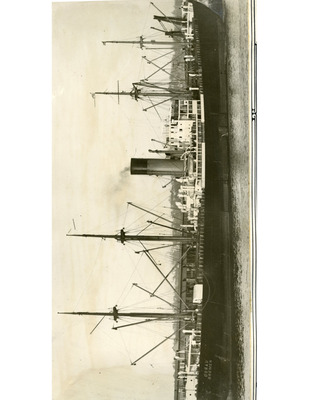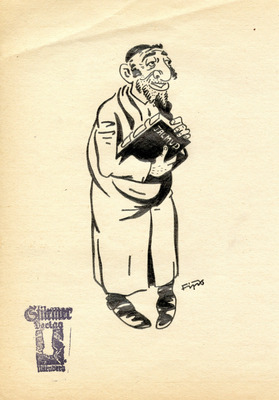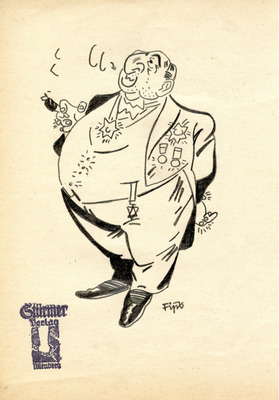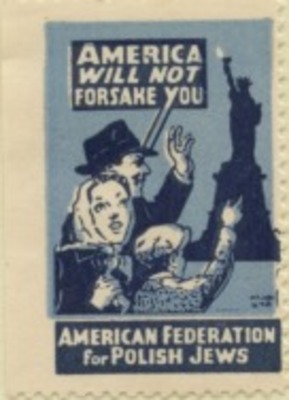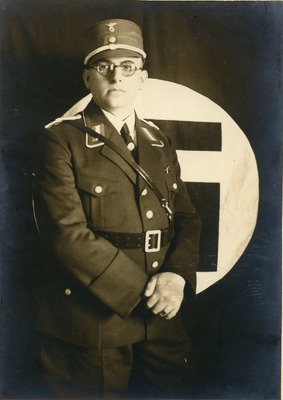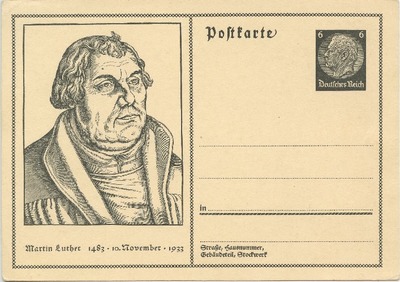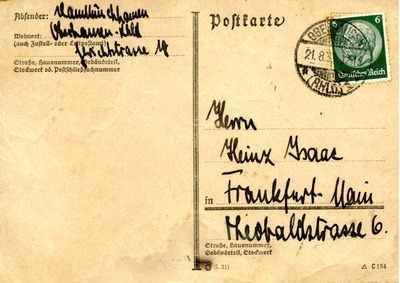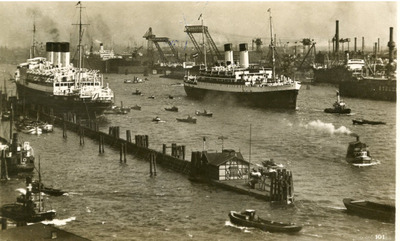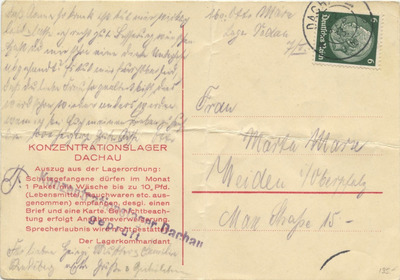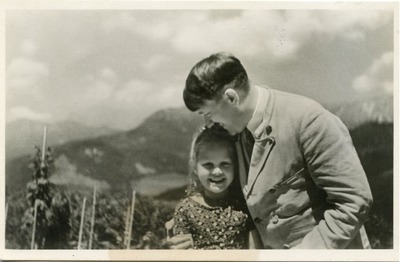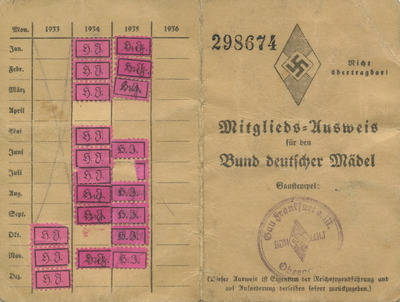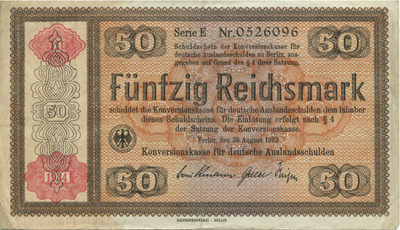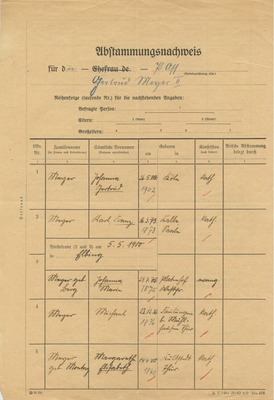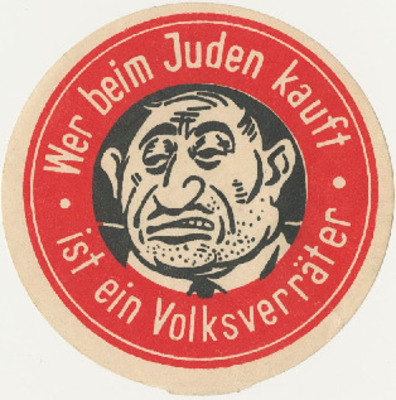

The Bulmash Family Holocaust collection is primarily dedicated to memorializing the six million Jews who perished in the Holocaust, but as well other victims of the Nazi scourge: Poles, homosexuals, Roma and Sinti, the developmentally and emotionally challenged, Jehovah’s Witnesses and political dissidents. It attempts to illustrate the successive stages of the Holocaust as Raoul Hilberg and others have described them: the Nazi definition and identification of the Jews, the expropriation of their assets, their concentration in ghettos, their deportation to concentration camps, and their ultimate extermination. This is by no means to suggest that Jews only perished in the final phase; rather, that sequencing these stages provides a heuristic and an historical outline of the evolving Nazi agenda.
Read more
-- written in 2014, updated 2021 by Michael D. Bulmash, K1966
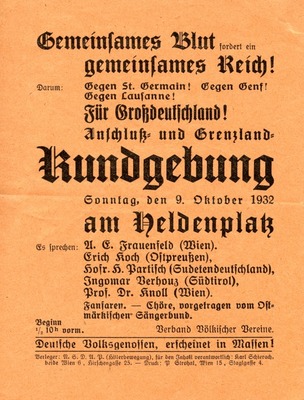
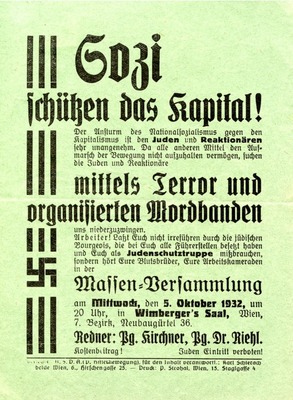
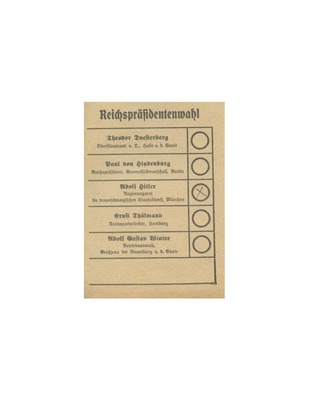
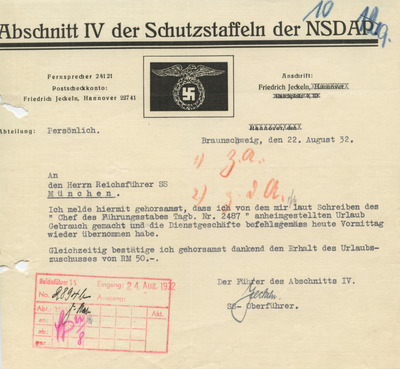
Rise of National Socialism and Early Persecution
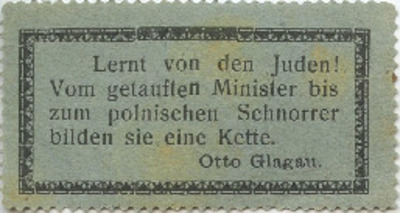
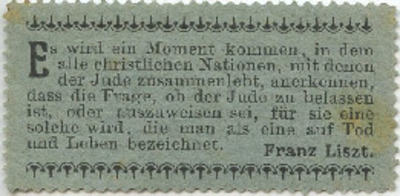
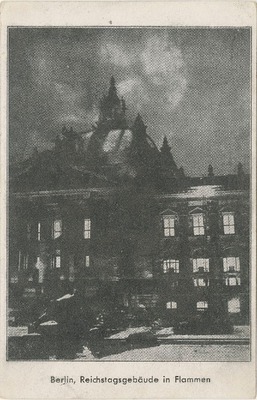
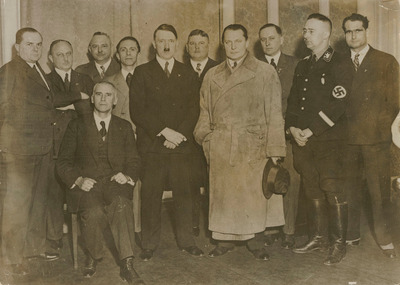
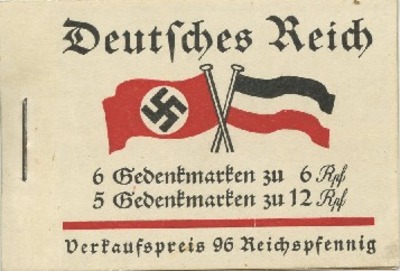
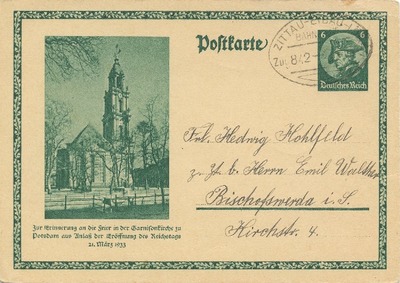
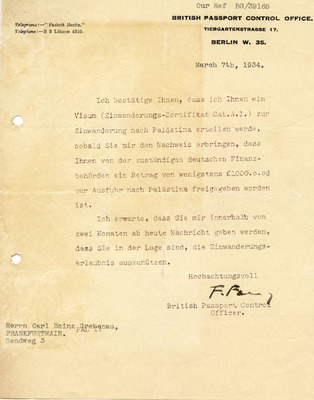
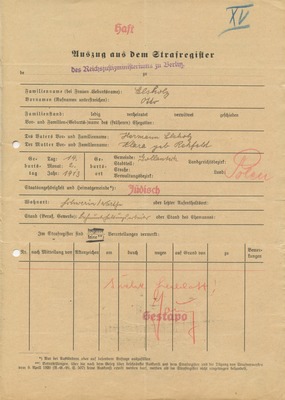
The Holocaust (1933-45) refers to Nazi Germany’s deliberate, progressive persecution and systematic murder of the Jews of Europe. Nazi antisemitism superseded traditional Judeo-Christian religious conflict by uniting a racial ideology with social Darwinism: the Jew is seen as subhuman, a disease threatening the body politic, and the cause of Germany’s problems—its economic woes, its defeat in World War I, its cultural degeneracy—and thus he must be eradicated. As soon as Hitler came to power in 1933, the Nazis commenced the organized persecution of the Jews. Jewish books were burned, and businesses boycotted. Jews were excluded from professions, public life, and from the arts. The Nuremberg laws of 1935 identified and defined a Jew based on immutable racial characteristics and lineage, less so his religion. Jews were stripped of their civil rights as German citizens. More than 120 decrees and ordinances were enacted subsequent to the Nuremberg laws. In 1938, Kristallnacht occurred, the planned pogrom that led to the destruction of synagogues, mass arrests, and the looting of Jewish businesses. Jews were murdered, and many more were interned in concentration camps that had been established for political prisoners. Jewish property was registered, confiscated, and ultimately aryanized. Life in Nazi Germany was sufficiently intolerable that more than 200,000 Jews emigrated. Hitler’s goal of making Germany “Judenrein” was proving successful.
With the Nazi’s ascension to power, other groups were imperiled as well, vulnerable to discriminatory treatment, persecution, and death; for example, the Roma and Sinti, the developmentally and physically disabled, homosexuals, and political and social "undesirables". Slavic people were considered Untermenschen, fit only for servitude in the new and expanded Reich. During this period, in direct contravention of the Treaty of Versailles, Germany was also secretly building its military and preparing for an eventual war. Yet it was the Nazi’s growing confidence and skill in pruning the aryan tree of its undesirables that allowed it to create an increasingly sophisticated technical apparatus for carrying out mass murder on an industrial scale, its ultimate goal the “final solution to the Jewish question.”
--Michael D. Bulmash, K1966
Aryanization
Flight and Emigration: The Odyssey of Jewish Refugee Alexander Distler from 1939-1955
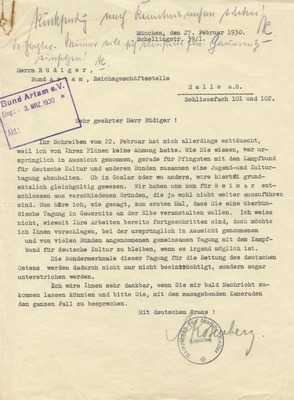
The Gathering Sturm: Examples of Personal Correspondence During Early Persecution of Jews
German Family Emigrates to New York after Kristallnacht
Julius Streicher and Der Sturmer
Nazi Euthanasia: Aktion T4
Nazification and Early Stages of Persecution: Identification, Expropriation; Aryanization; and Emigration
Orchestra of Exiles
The Polish Action (Polenaktion)
Shanghai Ghetto: The Experience of Stateless Jewish Refugees
The Search for Asylum: Alternatives to Shanghai
The Star of David Badge
Transatlantic Liner St. Louis
The Voyage of the Pentcho
What They Carried: The Kindertransport
German Occupation of Continental Europe: Deportation and Extermination
During this period emigration of Jews from Germany and Austria was closed down even as anti-Semitism became more extreme. With the advent of World War II on September 1, 1939, Jews fell increasingly under Nazi control as more European territory was conquered. Jews were placed in ghettos under brutal and appalling living conditions: slave labor, starvation and disease were rife, and many Jews perished, or were eventually sent to killing centers. Major ghettos included Warsaw, Lodz, and Lublin, but there were as many as 1000 ghettos in all. The Gestapo and the SS became organs of terror. Opponents of the Nazis were sent to concentration camps, and many never emerged. The Nazis utilized the Einsatzgruppen, mobile killing units following the Wehrmacht into the Soviet Union, murdering Jews and other groups targeted for elimination. The Einsatzgruppen, along with their local minions, ultimately murdered 1,500,000 Jews.
As the Einsatzgruppen continued to blaze a trail of murder through the Baltic states, Ukraine and the Soviet Union, Reinhard Heydrich officiated at the Wannsee Conference in January, 1942, where plans were discussed for the systematic extermination of all the Jews of Europe in all of the countries conquered by Germany. Entire Jewish communities were to be liquidated. Concentration camps, initially used to incarcerate political prisoners, became extermination centers for mass murder in gas chambers, especially after Heydrich’s assassination. While there were many concentration camps, the major extermination centers were Auschwitz, Belzec, Chelmno, Majdanek, Sobibor, Bergen-Belsen and Treblinka. Thus Jews were to be methodically killed with poison gas, or utilized as slave labor to be worked to death in war- related industries for the Reich.
Briefaktion Postcards from Auschwitz-Birkenau
Concentration Camps
Forced Labor Camps
Ghettos
Gisi Fleischmann and the Holocaust in Slovakia
Holocaust by Bullets
The Holocaust in the Netherlands
Internment Camps
Jacobsohn Family Third Reich Document Archive
Josiah DuBois and the War Refugee Board
Thessaloniki Sephardic Jews During the Holocaust
Transit Camps
Undercover Mail
Wilhelm Filderman (1882-1963) and the Holocaust in Romania
AID AND RESCUE DURING THE HOLOCAUST
With notable exceptions, most countries did little in the way of rescuing or aiding Jews persecuted by the Nazis and their allies during the Holocaust. Those countries that did take Jewish émigrés often placed severe restrictions on the number of prospective candidates. In the United States immigration was stymied by unrealistic quotas on Jewish immigration in part because of fear of competition for scarce jobs and resources and the economic burden immigrants could present in the wake of the Depression, but as well the intransigent antisemitism in Roosevelt’s own Department of State and the vaunted fear of enemy aliens made certain that the number of Jews admitted was kept artificially low, even lower than the “quota” would allow.
As polls taken at the time have demonstrated, pervasive antisemitism and distrust of Jews were common. Racist and antisemitic organizations did not want Americans to enter another European war especially if it was promoted by Jews since it would ultimately redound to their benefit. The failure of the Wagner-Roberts bill which would have allowed up to 20,000 Jewish children under the age of 14 to enter the US, and the active ignoring of the plight of the SS St. Louis passengers seeking safe harbor are testimony to the difficulties Jews faced finding asylum during this time. With the advent of World War II, Jews became even less of a priority. The burden of helping the Jews of Europe fell to a number of organizations and some extraordinary individuals, communities, and one remarkable nation.
See 2012.1.98, 2015.2.181, 2015.2.182, 2016.1.15, 2016.1.18, 2019.2.59, 2019.2.195, 2019.2.197.
Aid and Rescue: Communities
Aid and Rescue: Organizations
Aid and Rescue: Righteous Diplomats and Others
Aid and Rescue: The Example of Denmark
The Surviving Remnant: Commemoration and Revitalization
In the aftermath of Germany’s surrender on May 7, 1945, approximately 250,000 “liberated” Jewish survivors of concentration camps, slave labor camps, and death marches were designated “displaced persons.” Many were children and adolescents orphaned or unaccompanied by an adult. The survivors would refer to themselves as the “sh’erit ha-Pletah” (Book of Ezra 9:14) or “surviving remnant.” Unable or unwilling to be repatriated to their former countries, with limited possibilities for emigration, they would be confined to DP camps - former concentration camps, military barracks, or community housing - all under military administration in the Allied zones of Germany, Italy, and Austria. Many were debilitated from malnutrition, disease, and horrific abuse, and in urgent need of medical care. Despite the heroic provision of care by military physicians and nurses and even by physicians among the survivors themselves, many would still perish. The survivors would as well receive support from military clergy and from welfare and humanitarian organizations such as United Nations Relief and Rehabilitation Administration (UNRRA) and the American Jewish Joint Distribution Committee (“Joint”). UNRRA notably established a Central Tracing Bureau to help survivors potentially reconnect with other family members who survived the Holocaust. Philosophical differences notwithstanding and strong disagreements on some outcomes for the DP children, UNRRA worked with DP adults, Zionist Youth Organizations, the Jewish Agency for Palestine and others, all invested in helping accommodate the special needs of DP children who suffered longstanding severe emotional trauma, unfathomable loss and consequent developmental impairment.
Over time, survivors flourished with the rebirth of Jewish life in these DP camps. Newspapers were published and programs were created for both adults and orphaned children to acquire the language and technical skills needed to prepare for future vocations, including training in agriculture requisite for work in Zionist farming communities. Social and cultural events were abundant. Yeshivas were established in three camps and religious holidays once again became occasions for celebration. Competitive sporting events like soccer matches between different DP centers were important as the survivors regained their health. And as relationships blossomed, as survivors were able to trust their feelings again against a backdrop of enormous loss - even in these crowded quarters - marriages and childbirth would be widely prevalent.
Of course, DP camps were meant to be only temporary quarters for the Jewish refugees. DP camps for the refugees had an ineradicable connection to a horrific recent past, and for Jews to also have to endure the presence of Nazi collaborators in their midst, as well as their often-strained relations with a military administration that could little fathom what the survivors had endured was simply too much to bear. And most refugees felt there was little left for them in Europe. Their towns, homes, and families were gone. Antisemitic pogroms loomed large, such as the one in the Polish village of Kielce in which 42 Jews were murdered - after the Holocaust - and refugees no longer felt safe, the Allied victory over the Fascists notwithstanding. Most were hopeful they could emigrate to Palestine or to the United States, Canada, or Australia. Indeed, the Harrison Report itself, sharply critical of conditions in the DP camps for Jews, recommended resettlement of the refugees in both the US and Palestine, which prompted President Truman to give preference to DP residents in US immigration quotas. As well, Truman tried to facilitate resettlement of the survivors in Palestine.
Palestine, however, continued to be under British mandate and immigration quotas were strictly enforced. Britain’s unwillingness to make concessions for homeless Jews became an important impetus behind the “Bricha” (flight) movement, with the Jewish Brigade facilitating the exodus of refugees from Europe onto hapless boats bound for Palestine, moving the Jewish refugees - now stateless - past British blockades with the assistance of the Haganah and the Irgun - the Jewish underground in Palestine. While many of these so-called “illegal aliens” were able to elude the British and successfully land in Palestine, too often their boats were boarded, the refugees taken to detention camps on the island of Cyprus or other internment camps, with many of the physical reminders of the concentration camps the refugees thought they had left behind in Europe. It would be the British attack on the Exodus 1947 which would garner sufficient worldwide publicity in support of the plight of the refugees. Britain would end its mandate and withdraw from Palestine in May 1948. The United Nations vote for statehood for Israel in 1948 finally permitted the survivors of the Holocaust, the DP camps, and the internment camps to rejoice and at long last make their way home.
The Nuremberg trials were a consequence of Allied efforts to take legal action against Germany as a criminal state. The first tribunal consisted of eight judges drawn from each of the Allied countries. Twenty-one former Nazi leaders stood trial. The tribunal enshrined for the first time in jurisprudence and international law the concept of “genocide,” as well as a typology of war crimes to be utilized by the United Nations. In the ensuing years many courts both international and national would conduct trials of accused war criminals.
Bergen Belsen
The Doctors' Trial: First of the Twelve Subsequent Nuremberg Trials
Jewish Brigade
Post-Holocaust Commemoration and Revitalization: Displaced Persons Camps; Refugees and Emigration; Postwar Trials; Israel Statehood
Recha Freier and the Beginning of Youth Aliyah
SS Exodus 1947 and Refugees
The Zwirz Family: Belgian Jews Emigrate to the United States after the War
Additional Collections
“Atrocity” Photography and the Holocaust: Wendy Lower’s Quest for Justice
Channel Islands
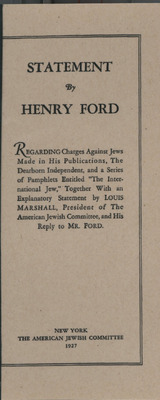
Examples of North American and British Antisemitism
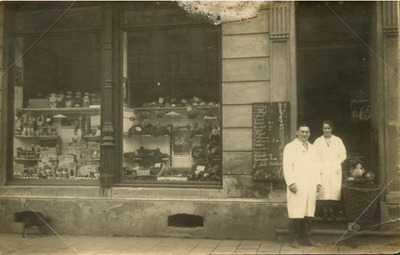
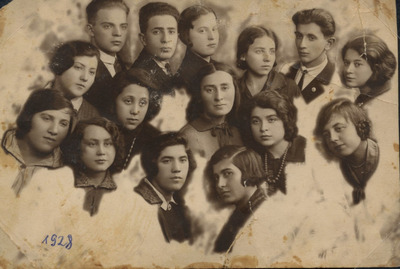
Jewish Life in Europe Before the Holocaust
Like Lambs to the Slaughter: Notes on Jewish Resistance in the Holocaust
Notes On the Holocaust and Material Culture
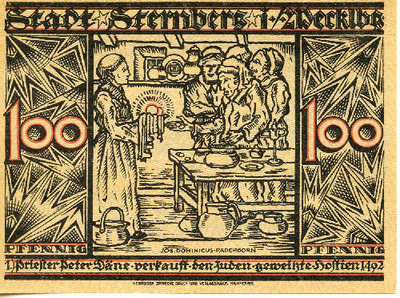
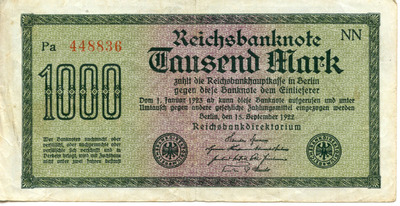
Philatelic and Numismatic Forms of Commemoration
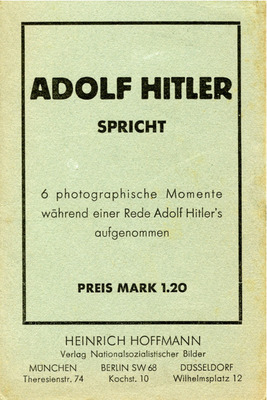
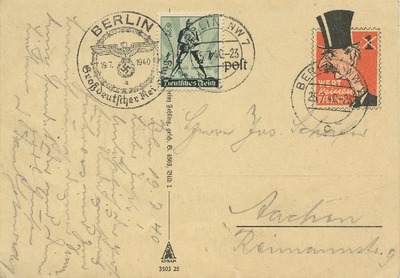
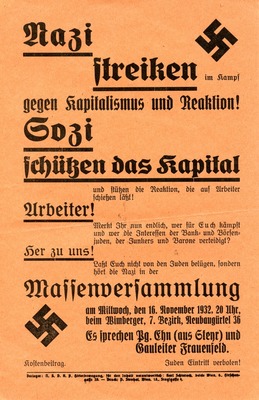
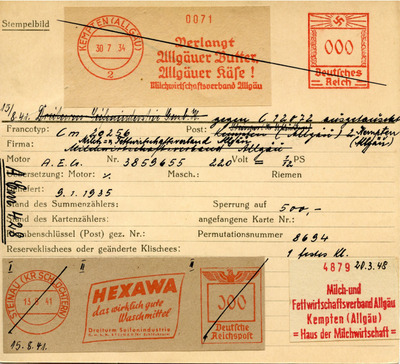
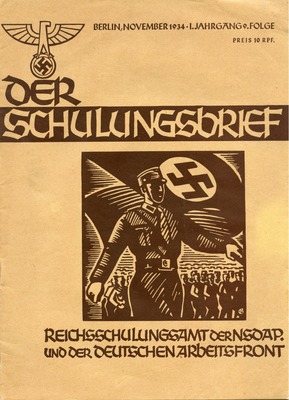
Propaganda
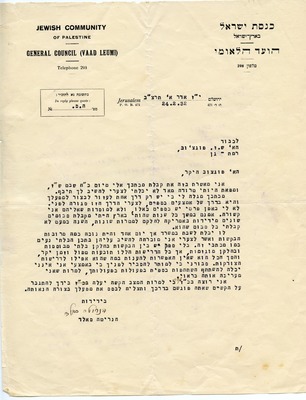
Provisional Labels and Covers Used During the Interim Period (Minhalet Ha’am)
Shana Tova Cards
Spanish Civil War
The Volkssturm
-
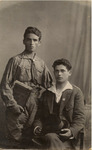
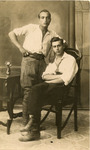
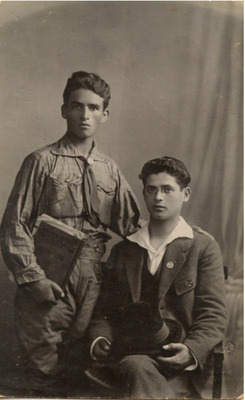
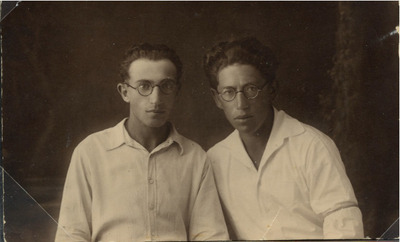
Polish Hashomer Hatzair From Cracow, Poland: Young Men Holding Book and Hat
2014.1.396
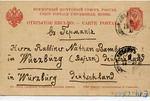
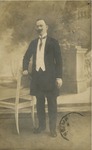
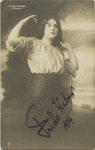
Postcard, Picture
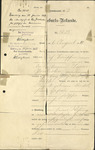
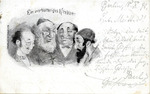
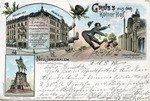
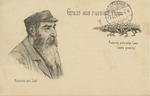
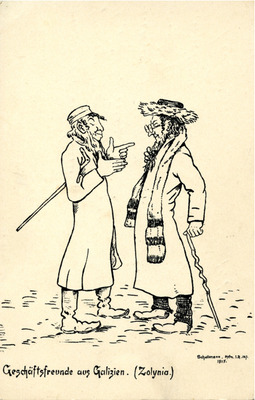
![Antisemitic Postcard: Geschäftsfreunde aus Galizien (Zolynia) [Business friends from Poland (Zolynia)]](https://digital.kenyon.edu/bulmash/1344/thumbnail.jpg "Antisemitic Postcard: Geschäftsfreunde aus Galizien (Zolynia) [Business friends from Poland (Zolynia)]")