
-
Artist Resume
Huan ZHANG 張洹
This document contains the resume of the artist, Zhang Huan. (Nicole Wang '26).
-
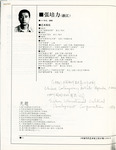
Resume: ZHANG Peili
Pei-Li ZHANG 张培力
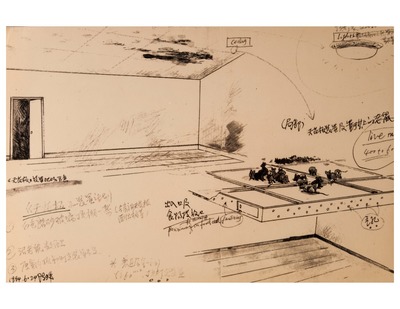
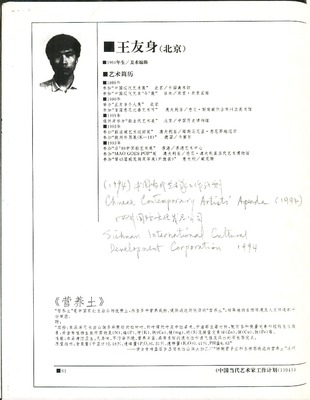
There are two versions of artist's resume here, Chinese and English respectively. Major exhibitions that the artist has participated in have been listed from 1985 to 1994. A proposal of the work "To be decided" is typed at the bottom of the resume. Two pages of pen-sketches about this work are attached with the proposal. The contents are part of the "Chinese Contemporary Artists' Agenda (1994)". (Yifan Shang '25)
-
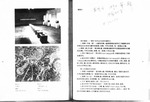
Exhibition Document: ZHANG Pei-Li
Pei-Li ZHANG 张培力
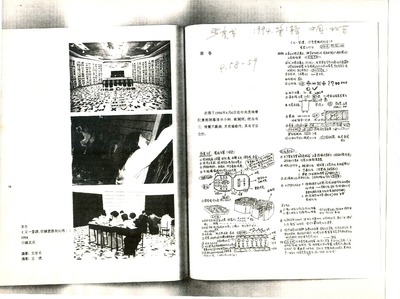
Two solo exhibitions of the artist are introduced in this document. Materials, dimensions, and descriptions of the works are illustrated and described in Chinese. This document is copied from the "Black Book", volume 1 in 1994, titled "The Red Flag" and edited by Ai Weiwei, Xu Bing and Zeng Xiaojun, a publication without an ISBN. (Yifan Shang '25)
-
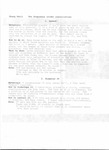
Proposals: Zhang Peili's Video Installations
Pei-Li ZHANG 张培力
Two proposals of artist's video installations, "Lenses" and "Diameter 30", are provided in English. (Yifan Shang '25)
-
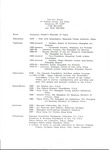
Resume: ZHANG Jian-Jun
Jian-Jun ZHANG 张建军
This resume consisted of the artist's information from 1977 o 1995, including education background, positions, fellowship and honors, the institutions that collected his work, places he gave lectures at and exhibitions. (Yifan Shang '25)
-
Exhibition Document: ZHANG Jian-Jun
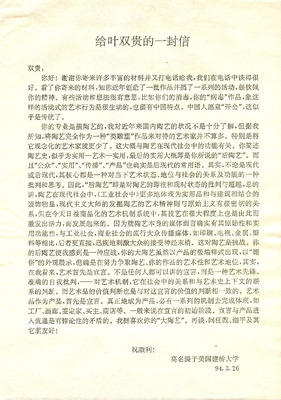
Jian-Jun ZHANG 张建军
Museum label information of works "Paradox of the Fish" and "To Fuse" are provided in English, including dates of creation, dimensions, materials, and descriptions of works. (Yifan Shang '25)
-
Resume: ZHANG Hong-Tu
Hong-Tu ZHANG 张洪图
This resume consisted of the artist's information from 1982 to 1995 including his education, awards, solo/group exhibitions, and the institutions that had his work in collection. (Yifan Shang '25)
-
Artist Statement: ZHANG Hong-Tu
Hong-Tu ZHANG 张洪图
The artist provides an explanation on the creation of holes in his work, which he used in his "Material Mao" series. (Yifan Shang '25)
-
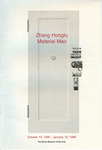
Exhibition Catalog: ZHANG Hong-Tu
Hong-Tu ZHANG 张洪图
The exhibition catalog mainly consisted of an interview between Lydia Yee and the artist about the exhibition "Zhang Hongtu: Material Mao", which took place in the Bronx Museum of Arts, New York from October 13, 1995 to January 14, 1996. Several selected works in the "Material Mao" series, a list of the works in this exhibition and a brief resume of the artist are included in the catalog. (Yifan Shang '25)
-
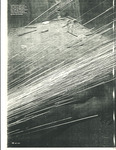
Poster: 25mm Diameter Rebar 海报:25mm 螺纹钢
Huan ZHANG 張洹
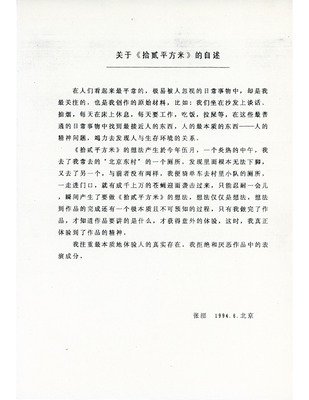
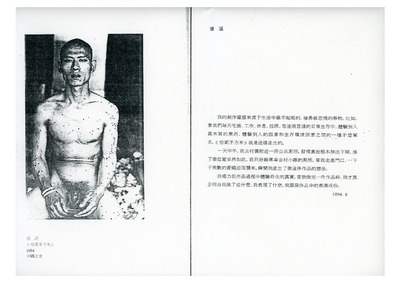
This poster is about the artist's action art "25mm Diameter Rebar", which took place in a constructing building in Beijing on April 30, 1995. Written in German, it is titled "A Lot is Risked in Beijing", with its subtitles stating "Western-style art is also gaining a foothold in China’s capital: locals like Zhang Huan and returning emigrants like Zhu Jinshi (Berlin) and Lin Tianmiao (New York) provoke the authorities with their actions". (Yifan Shang '25)
-
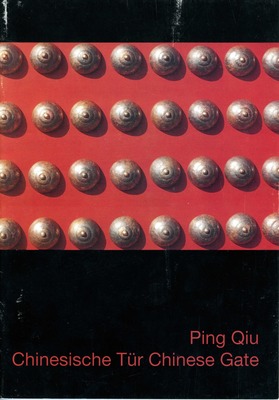
Essay: CHINAS AVANTGARDE 论文:中国的先锋艺术
Huan ZHANG 張洹
Kam Ping Hiller
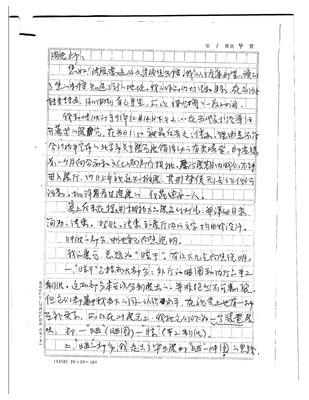
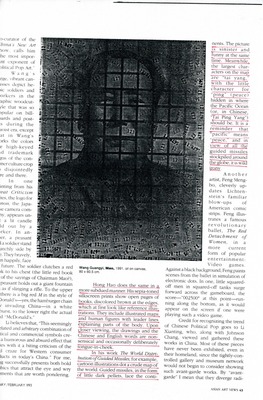
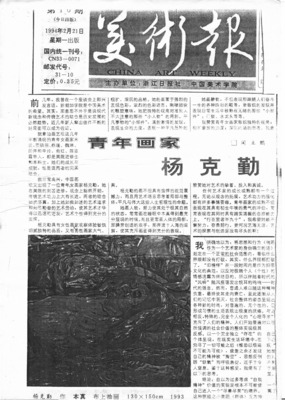
This essay, written in German by Sam Ping Hiller, discusses the Avant-Garde art and artists in China in the 1990s. It states how artists have shown a rebellious attitude towards the political and economic pressure through their works, using Zhang Huan as the example. This essay was published in "Schwarze Seiten", a German magazine, and has a photo of Zhang Huan's "65 kg" attached to the article. (Yifan Shang '25)
-
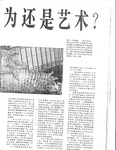
Essay: Is Action Art an Action or Art? 论文:行为艺术是行为还是艺术?
Huan ZHANG 張洹
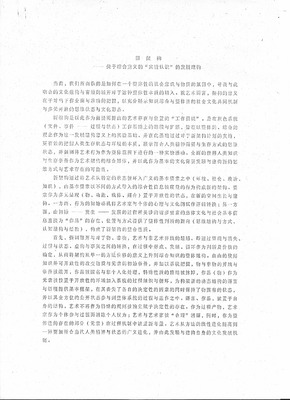
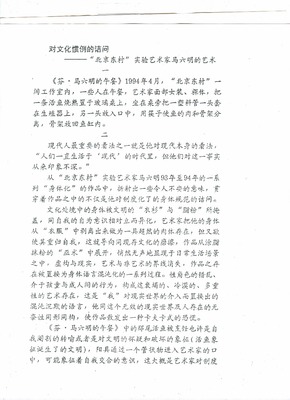
This essay, titled "Is Action Art an Action or Art?", discusses how action art should be a form of art first, rather than being a form of pure action. Zhang Huan's work "65 kg" is used as an example to reflect the social impact of action arts. The writer emphasizes the importance of having cultural or artistic implication in a work, rather being a pure series of action. (Yifan Shang '25)
-
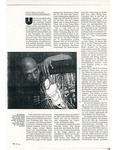
Essay: German Report on 65kg
Huan ZHANG 張洹
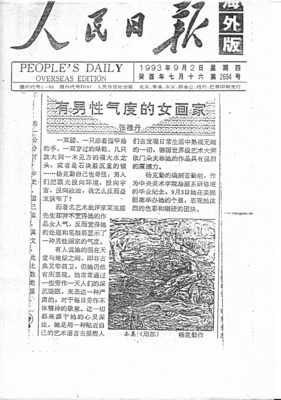
This German essay reviews Zhang Huan's actions "25mm Diameter Rebar", "65 kg" and "12 Square Meters" and discusses the status quo of Action Art in China. A photo of the artist with the photo of his work "65 kg" its attached. (Yifan Shang '25)
-
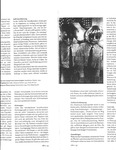
German Magazine Report on the "12 Square Meters"
Huan ZHANG 張洹
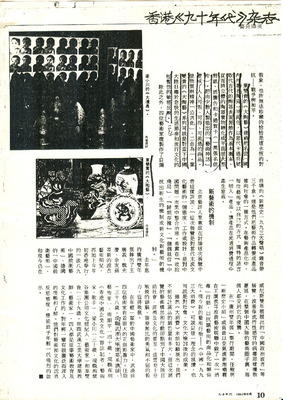
This report introduces the situation of contemporary Chinese art in China in the early 1990s. Works like Zhang Huan's "12 Square Meters" are used as examples of Chinese performance art. (Yifan Shang '25)
-
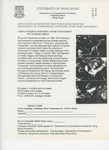
Publication Document: "Chen Danqing: Painting after Tiananmen"
Dan-Qing CHEN 陈丹青
This is an English announcement by the Department of Comparative Literature, the University of Hong Kong on the publication of the gallery catalog "Chen Danqing: Painting after Tiananmen", edited by Ackbar Abbas. It provides a brief introduction of this catalog and several works by the artist are printed in back-and-white. (Yifan Shang '25)
-
Exhibition Catalog: WU SHAOXIANG in Europe (1988-1993)
Shao-Xiang WU 吴少湘
This exhibition catalog, titled "WU SHAOXIANG in Europe 1988-1993", was published by the Austrian Art Association in Austria in April 1993. It consisted of a foreword, a preface, critiques about the artist's works, an artist's biography, and photos of sculptures and paintings created by the artist while he was in Europe from 1988 to 1993. (Yifan Shang '25)
-
Resume: LIU An-Ping
An-Ping LIU 刘安平
This resume consists of the artist's educational background, and his career, including experience of being expelled from school and imprisoned for a year for participating in political activities in 1989. . (Yifan Shang '25)
-
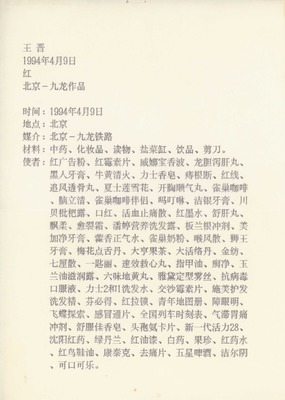
Resume
Peng WANG 王蓬
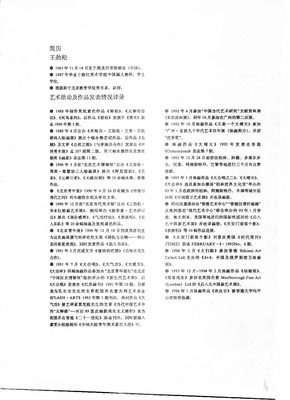
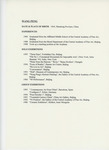
Resume of Wang Peng (王蓬). The artist, born in Shandong in 1964, experimented with painting, installation art, sculpture, performances, photography, and time-based medium throughout his career. The artist moved to the United States in the 1990s and returned to China in 2000 (Asian Art Archive, "Wang Peng"). This resume documents his time at the Central Academy of Fine Arts (Beijing, China) and his solo and group exhibitions from the mid-1980s to 1995. (Nicole Wang '26)
-
Exhibition: Maze of Mind 智光之境
Yi Bing (Bing-Yi HUANG) 黄冰逸
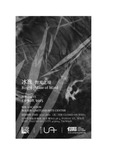
This document is a Chinese version outline for the artist’s exhibition Maze of Mind (智光之境). The exhibition was held in TaiChung from September 6, 2025 to September 28, 2025. The text traces the artist's twelve-year creative journey centered on consciousness, mind and the cosmos. It also include brief institutional introductions for the artist and her collaborating partners, Maze of Mind 智光之境 (無竟美術) and INK studio (墨斋). Additionally, this document includes images of individual artwork, along with links to website descriptions of the specific works. (Angela Tan, 28')
-
Maze of mind 心之万象
Yi Bing (Bing-Yi HUANG) 黄冰逸
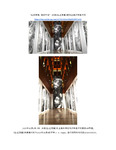
This article introduces the artist’s exhibition Maze of Mind 心之万象. Following the main idea that “the mind is all things, the brain is the universe,” the exhibition uses painting to explore the human heart, brain, wisdom, and spirit. It takes “xiang (image) 象” from Chinese aesthetics as a key concept, understanding “xiang” as the outward expression of the mind. The exhibition is presented in four chapters: “Myriad Things 万物” emphasizes that the human’s mind is an expression of perception and interdependence with all life. “Universe 宇宙” compares the brain to galaxies and expresses the core power of love. “Emptiness 空性,” drawn from Buddhist thought, emphasizes observing the universe and the self with mindfulness. “Miracle 神迹” centers on creativity and sees awakened consciousness as a co-creator of the universe. Those artworks show the connection between human beings and the vastness of the universe. (Angela Tan ‘28)
-
Resume: Aniwar Mamat
Aniwar MAMAT 艾尼瓦尔
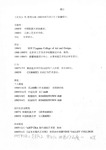
This resume was written in Chinese. It consists of the artist's education, work experience, and the exhibitions he has participated in from 1985 to 1994. (Yifan Shang '25)
-
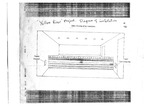
Diagram: the Yellow River Project
Qiang CHEN 陈强
This is a diagram of the installation art "Yellow River", which was created from 1994 to 1996. The installation consists of water, earth, and rock samples from the Yellow River. The earth and rock samples were taken from the Yellow River basin from the origin to the estuary, and the 99 water samples came from 99 different sections of the Yellow River, which "compose a microcosm of the Yellow River" (For more information of this work, see https://digital.kenyon.edu/zhoudocs/27/). (Yifan Shang '25)
-
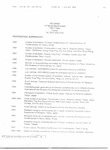
Resume
Da-Wei FEI 费大为
费大为
Resume of Fei Da-Wei, a Paris-based Chinese art critic and curator (in English). (Nicole Wang'26).
-
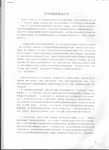
Regarding Chinese Conceptual Art (Essay)
Da-Wei FEI 费大为
This is an essay, titled "On Conceptual Art in China," written by the Paris-based art critic about the origin and state of Chinese Conceptual Art. The corresponding document is an abstract of the essay written by Zhou Yan. (Nicole Wang '26).
Printing is not supported at the primary Gallery Thumbnail page. Please first navigate to a specific Image before printing.