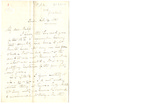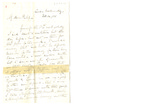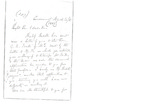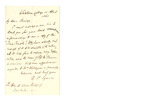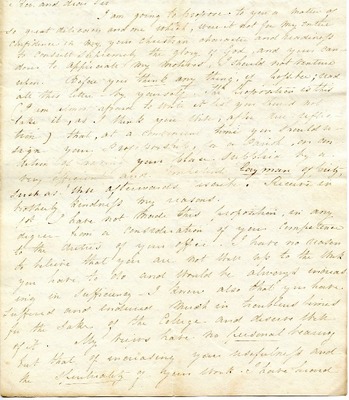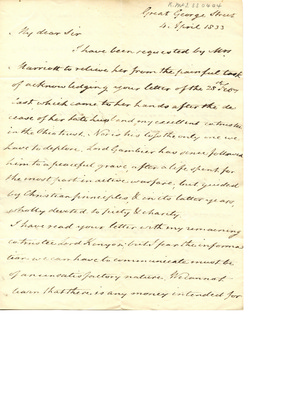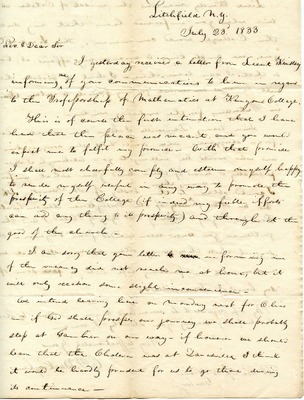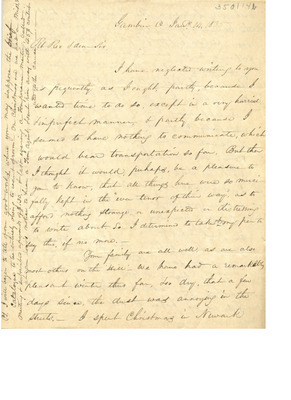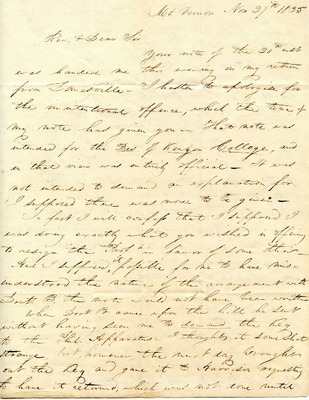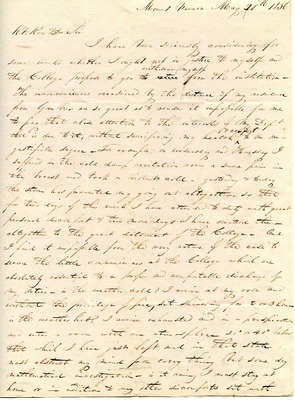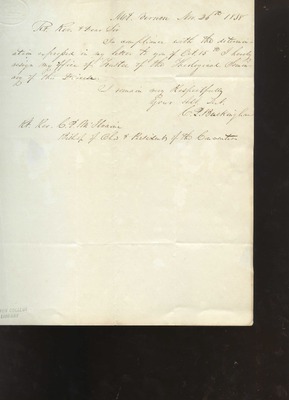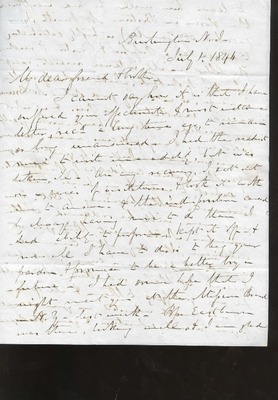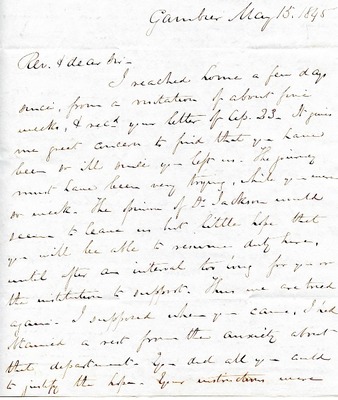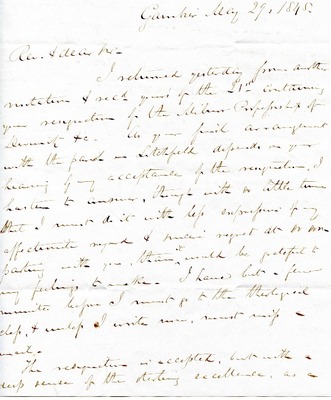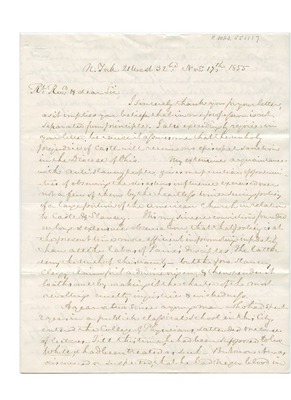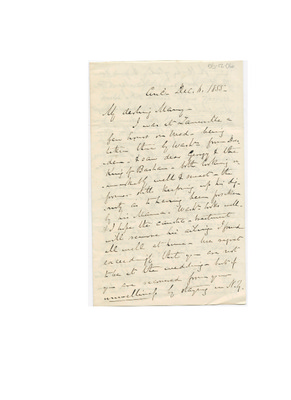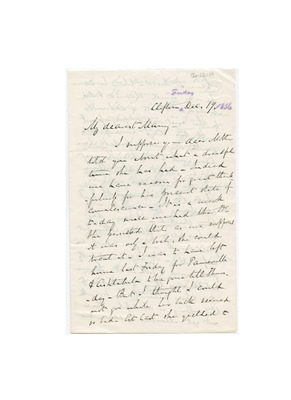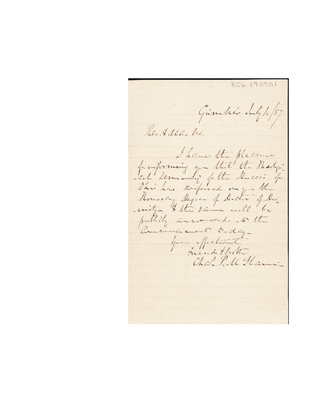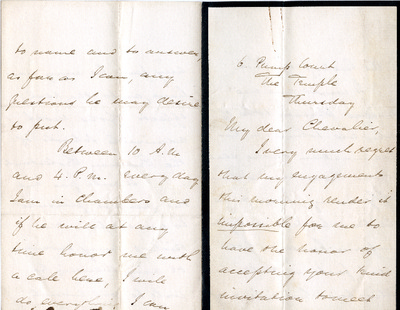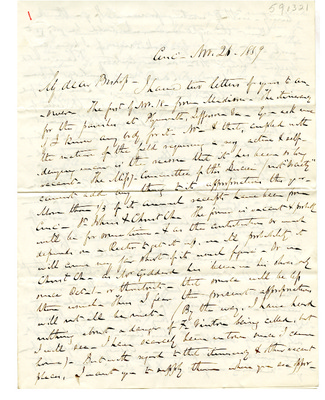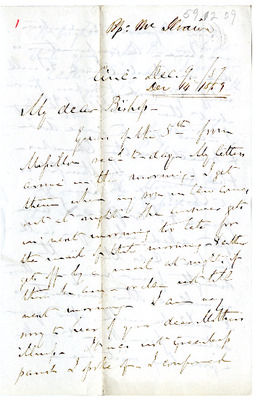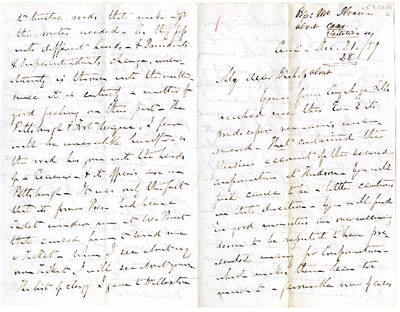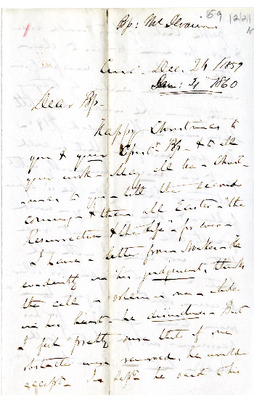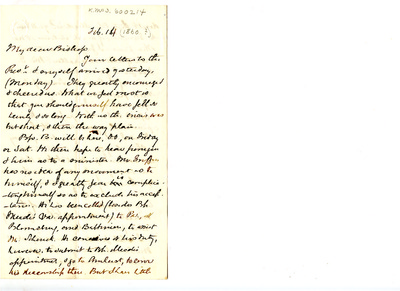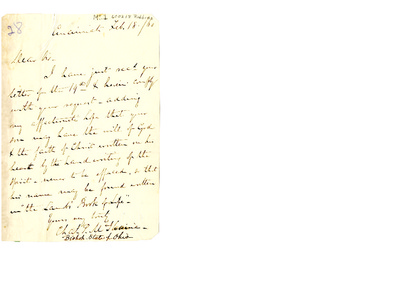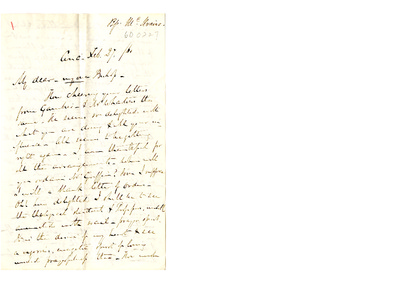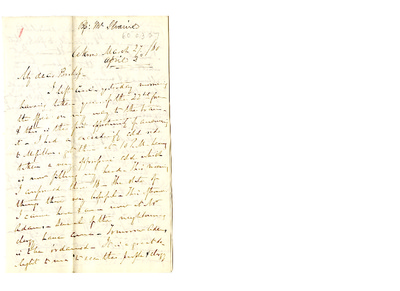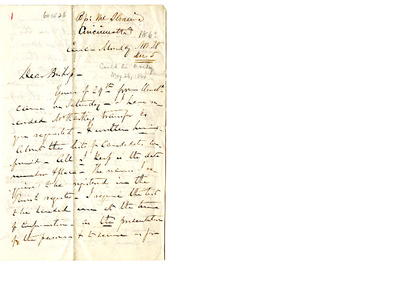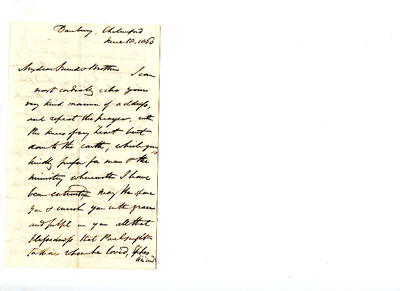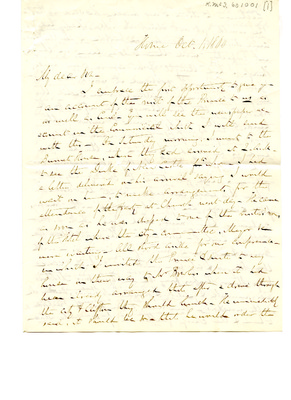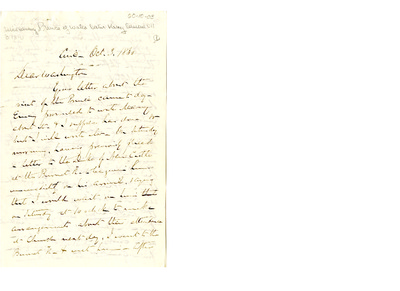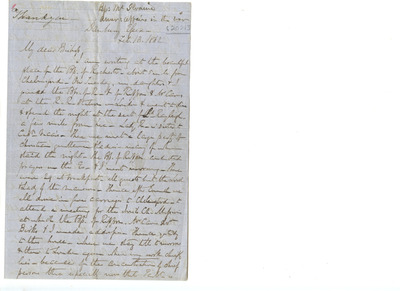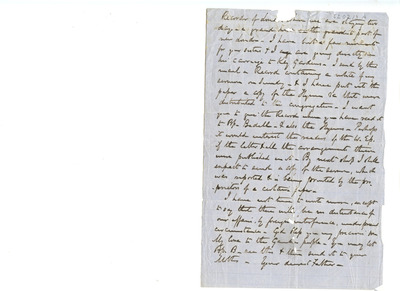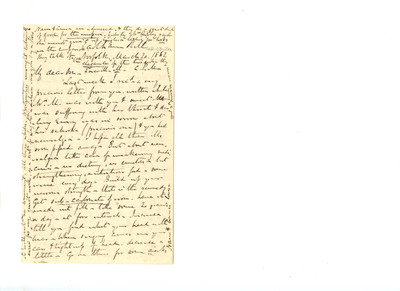

The Rt. Rev. Charles Pettit McIlvaine, D. D. was the second President of Kenyon College serving from 1832 to 1840. This collection of his letters is kept in the College Archives and is available to researchers.
The Charles P. McIlvaine letters were written in the 18th and 19th century and therefore may contain language that we understand today as harmful or offensive. You may encounter paternalist descriptions of Native Americans, racial slurs, or sexism. For more information, see our policy page.
This project is ongoing. More materials are added periodically.
-
C.P. McIlvaine to George W. DuBois
Charles Pettit McIlvaine
October 3, 1860
Full account of the visit of the Prince of Wales (later Edward VII) to McIlvaine's home in Clifton.
-
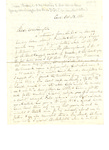
C.P. McIlvaine to George W. DuBois
Charles Pettit McIlvaine
October 31, 1860
Full account of meeting with the Prince of Wales (later Edward VII) at West Point, N.Y.
-
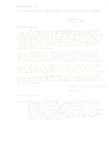
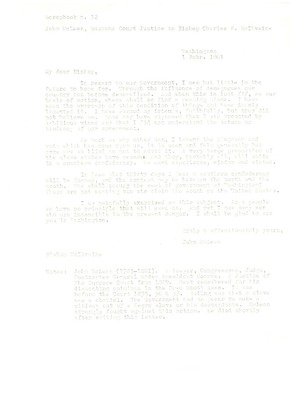
Letter to C. P. McIlvaine
John McLean
February 1, 1861
Discussion of present state of affairs and the C.S.A. with "but little in the future to hope for"
-
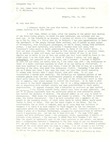
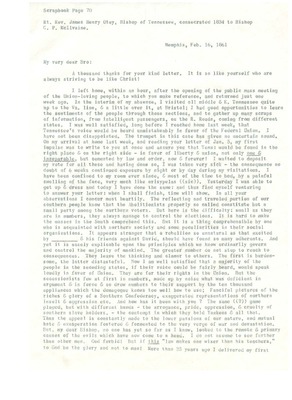
Letter to C. P. McIlvaine
James Henry Otey
February 16, 1861
Civil War: meeting of pro-Union people; Tennessee on Union's side but those that control elections are against; visitations; abolitionists; Democratic party is doomed; Buchanan; secession, its effect on the church; runaway slaves, slaveholders' rights; Americans do not listen to their elders
-
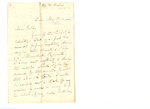
C.P. McIlvaine to Bp. Gregory T. Bedell
Charles Pettit McIlvaine
May 13, 1861
Responding to Bedell about Church meetings and publications.
-
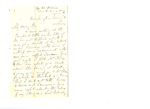
C.P. McIlvaine to Bp. Gregory T. Bedell
Charles Pettit McIlvaine
June 24, 1861
Visiting with Lincoln, describing the front lines of the war
-
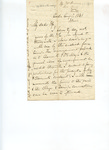
C.P. McIlvaine to Bp. Gregory T. Bedell
Charles Petitt McIlvaine
August 7, 1861
Visit with confederate prisoners of war
-
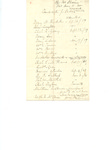
C.P. McIlvaine personal notes
Charles Pettit McIlvaine
October 12, 1861
list of candidates for Order; list of those applying to be admitted into the Diocese; appropriations of _____ ______ committee's money; list of visitations(?) at 1861 convention
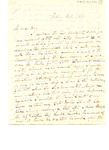
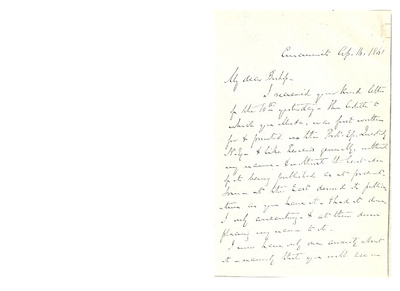
![C.P. McIlvaine to [Bp. Gregory T. Bedell?] by Charles Pettit McIlvaine](https://digital.kenyon.edu/mcilvaine_letters/1060/thumbnail.jpg "C.P. McIlvaine to [Bp. Gregory T. Bedell?] by Charles Pettit McIlvaine")
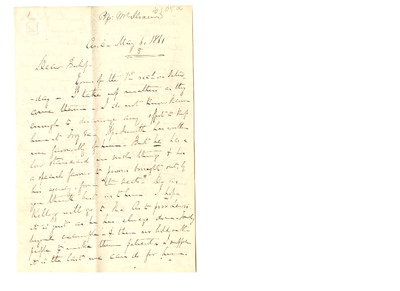
![C.P. McIlvaine to Bp. [?] by Charles Pettit McIlvaine](https://digital.kenyon.edu/mcilvaine_letters/1110/thumbnail.jpg "C.P. McIlvaine to Bp. [?] by Charles Pettit McIlvaine")