Volume 10, Issue 1
(2026)
Thinking about art and culture from a global perspective has been a theme in medieval art for some time. This issue presents two feature articles which present some of the most interesting approaches to our understanding of “medieval;” and its reception and change through that reception.
Lawrence Nees, starting from the basics of place of production and findspots, investigates examples of intercultural exchange in the early medieval period, such as how and why an early medieval dagger from northwest Europe was excavated in a Silla-period tomb in Korea and a Buddha from the Swaat Valley, north Pakistan was found in a tomb in Helgő, central Sweden.
Sreeja Chowdhury focuses on how “colonial architecture in India increasingly frames British interventions through the lens of medieval Gothic theory, linking stylistic revivalism to the assertion of authority.” The architects did not just replicate the original, but rather made significant changes to frame imperial authority and to remain standing in “a very different climate than England.”
Continuing another fascinating approach to medieval art is the essay by Cathy Stillman-Lowe on how accessing and learning about medieval art, particularly churches, brought true comfort during a difficult time and joyfully changed her life.
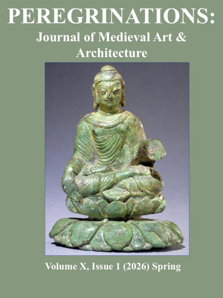
Personally, as someone who has studied and taught both Asian and medieval art and had her life changed by both, I am thrilled to publish these articles and to feature Buddha Śākyamuni on the cover.