

Files
Download
Download Full Text (4.5 MB)
Content Warning
The Charles P. McIlvaine letters were written in the 18th and 19th century and therefore may contain language that we understand today as harmful or offensive. You may encounter paternalist descriptions of Native Americans, racial slurs, or sexism. For more information, see our policy page.
Description
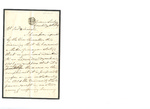
Regarding an honorary degree to be granted by Cambridge to McIlvaine.
Date
10-10-1867
Keywords
letter, Phillips, McIlvaine, honorary degree, Cambridge
Recommended Citation
Phillips, George, "George Phillips to C.P. McIlvaine" (1867). Charles Pettit McIlvaine Letters. 230.
https://digital.kenyon.edu/mcilvaine_letters/230
Rights Statement

Transcript
Queens Lodge
Cambridge
Oct. 10, 1867
Rt. Rev. & dear Sir,
I have been informed by the Vice Chancellor this morning that he has received a letter from you stating that you were admitted to an ad eundem Degree here in 1858 you suppose that it is mainly the same as the compliment it is proposed to confer on you on Saturday. In 1858 the University had no power, except in one or two cases, of conferring honorary Degrees. An ad eundem Degree is not an honorary one. Any person may have it on application. The degree honorary causi, which the University, under the New Statutes, is now able to grant is intended, when it is conferred, to be considered by as a compliment to distinguished position or public services. I thought, therefore, you will give me the pleasure of your company on Saturday morning at the Lodge. Even if you do not take the Degree, the Vice Chancellor is of the opinion, and I fully concur in it, that in consequence of your prominence as a Bishop of the United States Episcopal Church, your presence here on Saturday would be most desirable.
I remain,
Rt. Rev. & dear Sir,
yours very truly
Geo. Phillips